How Casino Stories Use Lâm Đồng as a Screen Setting
See how casino stories use Lâm Đồng in screen design, from landscape and color to editing, without treating a dramatic setting as local history.
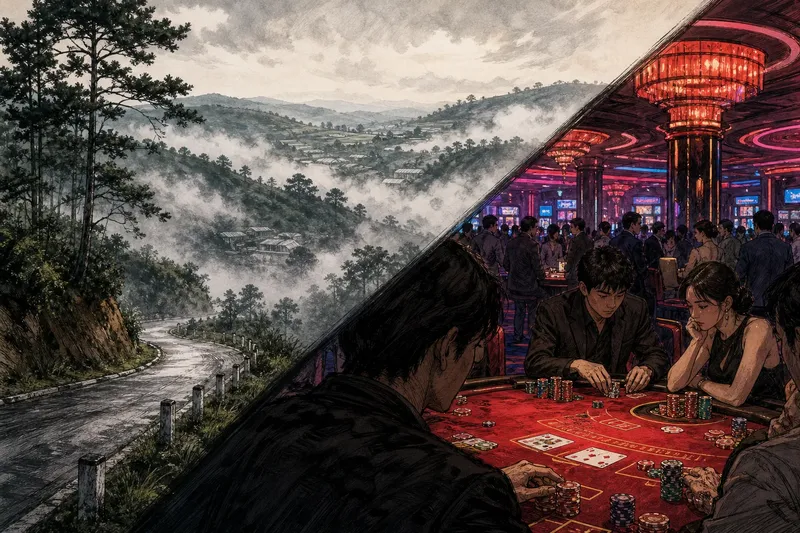
A casino scene opens on a foggy hillside, then cuts to a table under sharp neon light. In a screen story about Lâm Đồng, that contrast can shape the audience’s expectations before any character speaks.
How does Lâm Đồng shape a casino scene?
Filmmakers can use a landscape, a road, or a place name to give a story a distinct visual frame. A quick cut from quiet scenery to a crowded gaming room can set up tension, escape, or a clash between two moods.
That contrast is a choice in composition and editing. It may help the scene feel rooted in a particular province, but it does not by itself explain local culture or identify a real entertainment venue.
When describing the scene, focus on the visual relationship: what appears first, what follows, and how the transition changes the mood.
What screen details carry the story?
Look beyond the place name. Color, sound, framing, and props can show how the production wants viewers to read a casino-style sequence.
- Color: If the landscape uses muted tones and the gaming room shifts to vivid colors, describe the contrast; if both scenes share a palette, note the visual continuity instead.
- Sound: If music grows louder at the cut, describe the change in energy; if the soundtrack stays quiet, note how that restraint shapes the scene.
- Framing: If the camera holds on a wide view, describe the setting’s visual prominence; if it moves close to hands or game pieces, describe the tighter focus.
- Props: If cards, chips, or a wheel appear, name the objects shown; if they are absent, avoid calling the space a gaming scene based on lighting alone.
- Editing: If the sequence cuts directly from scenery to a table, describe the juxtaposition; if it shows a character traveling between them, note the narrative link.
- Text and credits: If a title card names Lâm Đồng or credits identify a location, report that wording; if neither does, leave the specific setting or filming site unstated.
A useful viewing note records a visible detail, its place in the sequence, and the production clue that supports your description.
How do setting, filming, and visual reference differ?
Story setting is where the narrative says events happen. An invented casino can be placed in Lâm Đồng without depicting a real business.
Filming location is where the production recorded a scene. An exterior and an interior may be filmed in different places, so use credits or official production notes when stating where filming occurred.
Visual reference is imagery that suggests a place through landscape, architecture, signage, or other details. A shot may evoke Lâm Đồng without identifying an exact site.
Choose the term that matches the production detail you can point to. A title card can name the story’s setting; it does not, on its own, locate the camera.
How can you describe casino imagery precisely?
Identify what is on screen and what role it plays. A close-up of cards can focus attention on a decision; colored lights and tense music can make a room feel charged. Those are observations about the scene’s visual language, not evidence about real venues.
Prefer precise verbs. Use “shows” for visible objects, “sets” for the story’s location, “evokes” for an indirect visual reference, and “films” only when production material identifies where recording took place.
For instance, “The sequence pairs a Lâm Đồng reference with a staged card-table scene” describes the connection without implying that the scene documents local entertainment.
What should you check before describing a screen setting?
Does a place name identify where filming took place?
No. A place name may identify the narrative setting or serve as a visual reference. Use credits or official production notes to support a statement about filming location.
Can a landscape identify an exact site?
A landscape can suggest a region without pinpointing a location. Name a specific site only when the production identifies it or a clear source supports the identification.
What does a casino-style interior establish?
It establishes that the scene uses casino-style design or imagery. Call it a real venue only if production context or a reliable identification supports that description.
How should a caption handle missing location details?
Name the visible elements and state what remains unidentified. For example, describe a Lâm Đồng reference followed by a card-table scene, then say the credits do not name where filming occurred.
How would a caption handle conflicting clues?
Say you are captioning an invented short drama. Its opening title card names Lâm Đồng; the exterior shows a foggy hillside; a cut leads to a fictional card table; and the credits name no filming location.
First, record the title card as the story’s place reference. Next, describe the hillside and card table as images in the drama, not as verified local sites. Then check the credits and leave the filming location unspecified. The resulting caption could read: “The drama places its story in Lâm Đồng and cuts from a hillside to a fictional card-table scene; its filming location is not identified.” The tradeoff is that the caption preserves the visual connection while leaving the camera’s location unanswered.
For a clear account of casino stories using Lâm Đồng, keep the story setting, visual design, and filming location distinct. That distinction lets readers appreciate how a production builds atmosphere without turning its screen imagery into a claim about local life.